Collaborative Coaching: Building the Conditions for Better Collaboration
Collaboration doesn't begin in the boardroom—it begins in the conversations, relationships, and systems that shape how people work together every day. Explore why creating the right conditions for collaboration may be the most important leadership challenge of our time.


By David LeBlanc & Suzanne Fox, Co-Founders, Collaborative Coaching Group
Over the past several years, the two of us have had the privilege of working alongside executive teams, major infrastructure projects, municipalities, healthcare organizations, utilities, and leadership teams navigating increasingly complex challenges.
Although every organization is different, we have noticed something remarkably consistent:
More often, it is because the environment surrounding those people makes collaboration difficult.
Organizations invest heavily in leadership development, strategic planning, governance, project management, and communication. These investments are important, but they often focus on improving the parts rather than strengthening the connections between the parts.
That distinction matters.
Today's most significant challenges cannot be solved by one leader, one department, or one organization acting alone. They require people to think together, decide together, adapt together, and remain connected even when the work becomes difficult.
This realization has shaped the work we now call Collaborative Coaching.
Collaboration Is Not a Meeting
Many people assume collaboration happens during meetings.
We see it differently.
Meetings simply reveal the quality of collaboration that already exists.
Real collaboration is built in dozens of small moments that often go unnoticed:
- A project manager asking for another perspective before making a decision.
- A leader acknowledging uncertainty rather than pretending to have all the answers.
- A contractor raising a concern early instead of waiting until it becomes a crisis.
- Two departments choosing curiosity instead of defensiveness.
- Someone feeling safe enough to respectfully challenge an idea.
These seemingly ordinary interactions either strengthen or weaken collaboration every single day.
By the time people gather around a boardroom table, the foundation has already been built (or it hasn't).
Moving Beyond Individual Coaching
Executive coaching has traditionally focused on helping individual leaders become more effective.
That work remains incredibly valuable.
But today's organizations are facing challenges that extend beyond individual performance.
Increasingly, the greatest opportunities, and the greatest risks, exist in the spaces between people.
Between departments.
Between organizations.
Between project partners.
Between competing priorities.
Between strategy and execution.
Between intention and experience.

Collaborative Coaching expands the focus from developing individual capability to strengthening collective capability.
Instead of asking,
"How do we help this leader become more effective?"
we begin asking,
"What conditions will help this entire system collaborate more effectively?"
That subtle shift changes everything.
Coaching the Relationships, Not Just the People
One of the most rewarding aspects of our work is helping organizations notice patterns they have often stopped seeing.
Rather than immediately solving problems, we become curious.
Where does trust naturally emerge?
Where does it quietly disappear?
Which conversations never happen?
Where do assumptions replace curiosity?
What structures unintentionally create friction?
How are today's challenges connected to yesterday's decisions?
When viewed through a systems lens, many challenges that appear to be people problems begin to reveal themselves as relationship or system challenges.
Instead of fixing individuals, we begin strengthening the environment in which people work together.
Six Conditions That Shape Collaboration
Through our work together, we've identified six conditions that consistently influence whether collaboration flourishes or struggles.
Relational: Trust, psychological safety, empathy, and the quality of relationships.
Structural: Clear governance, defined roles, decision-making processes, and accountability.
Operational: The everyday habits, communication practices, meetings, and workflows that support effective teamwork.
Commercial: Shared objectives, resource commitments, and mutual success.
Adaptive: The willingness to learn, adjust, experiment, and remain resilient when circumstances change.
Systemic: An appreciation for the wider environment, recognizing that every decision creates ripple effects throughout the broader system.
When these conditions reinforce one another, collaboration becomes easier.
When several begin to weaken simultaneously, even experienced and highly capable teams often struggle.
The answer is rarely another meeting.
The answer is strengthening the conditions that allow collaboration to succeed.
Collaboration Is a Capability
Perhaps the biggest shift in our thinking has been recognizing that collaboration is not simply a skill.
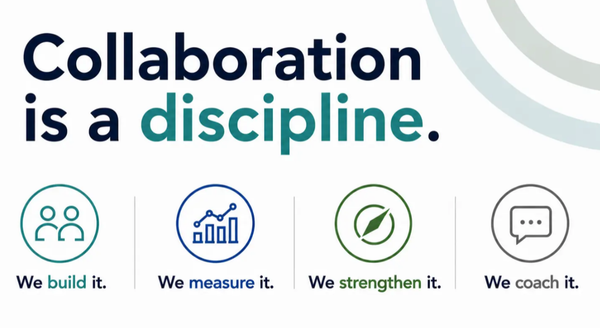
It is an organizational capability, and like any capability, it can be intentionally developed.
It can be measured.
It can be strengthened.
And it can become a competitive advantage.
Organizations that consistently collaborate well tend to make better decisions, respond more effectively to uncertainty, innovate more quickly, and create environments where people genuinely want to contribute.
In an increasingly interconnected world, those capabilities matter more than ever.
The Conversation Is Just Beginning
One of the things we enjoy most about this work is that we continue learning alongside every client we support.
Every project teaches us something new.
Every leadership team offers a different perspective.
Every collaboration reveals patterns that deepen our own understanding.
That spirit of curiosity is something we hope to share more broadly.
Over the coming months, we'll be exploring Collaborative Coaching through future TEAMshift articles, conversations on the Space to Lead Podcast, and practical tools and resources from the Collaborative Coaching Group.
Our hope is not simply to introduce another model.
It is to encourage a different conversation.
One that asks not only how we develop better leaders, but how we create better conditions for people to think together, solve problems together, and build something none of them could accomplish alone.
Because collaboration is not a destination.
It is a discipline.
And like every meaningful discipline, it is something we continue to practise, refine, and learn together.
Continue the Conversation
Collaborative Coaching is an evolving practice built on the belief that better collaboration creates better outcomes. If these ideas resonate with you:
- 🎙️ Listen to the Space to Lead Podcast, where David and Suzanne explore leadership, collaboration, and organizational culture with guests from a wide range of sectors. You can find us on your favourite podcast provider.
- 🌐 Visit the Collaborative Coaching Group to explore practical models, case studies, and resources designed to help organizations strengthen collaboration.
- 📖 Watch for future Collaborative Coaching Insights columns in TEAMshift Magazine as we continue to share lessons from the field.